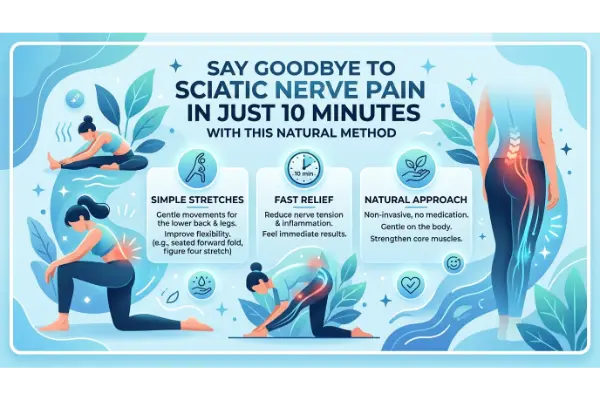
Say Goodbye to Sciatic Nerve Pain in Just 10 Minutes With This Natural Method
Sciatic nerve pain can turn simple daily activities into a challenge. Sitting at your desk, driving to work, bending down, or even walking can trigger sharp pain that runs from your lower back into your leg.
If you’re looking for a natural way to find relief, certain gentle movements and stretches can help reduce pressure around the sciatic nerve. While no method can permanently eliminate every case of sciatica in just 10 minutes, many people experience noticeable relief after a short stretching session.
The key is choosing movements that relax tight muscles and improve mobility without irritating the nerve further.
Quick Overview
| Benefit | Result |
|---|---|
| Less tension | Better comfort |
| Improved mobility | Easier movement |
| Reduced stiffness | Better flexibility |
| Gentle stretching | Temporary relief |
| Natural approach | No medication |
What Is Sciatic Nerve Pain?
Sciatica occurs when the sciatic nerve becomes irritated or compressed. The sciatic nerve is the largest nerve in the body and travels from the lower back through the hips and down each leg.
Common symptoms include:
- Lower back pain
- Hip discomfort
- Leg pain
- Tingling sensations
- Burning feelings
- Numbness
- Muscle weakness
The intensity can vary from mild discomfort to severe pain that affects daily life.
Why Stretching Can Help
| Problem | How Stretching Helps |
|---|---|
| Tight muscles | Relaxes tissues |
| Poor mobility | Improves movement |
| Stiff hips | Increases flexibility |
| Muscle tension | Reduces pressure |
| Limited motion | Restores range |
In many cases, tight muscles around the hips, lower back, and glutes can increase pressure on the sciatic nerve. Gentle stretching helps release tension in these areas, which may reduce discomfort.
The 10-Minute Natural Method
The following routine focuses on flexibility and muscle relaxation. Move slowly and stop immediately if any exercise increases your pain.
1. Knee-to-Chest Stretch
Lie on your back and gently pull one knee toward your chest. Hold the position for 20 to 30 seconds before switching sides.
Benefits:
- Relaxes lower back muscles
- Improves flexibility
- Reduces stiffness
2. Figure-Four Stretch
Lie on your back. Cross one ankle over the opposite knee. Slowly pull the supporting leg toward your chest.
Benefits:
- Stretches the piriformis muscle
- Opens the hips
- May reduce nerve pressure
3. Seated Hamstring Stretch
Sit on the floor with one leg extended. Lean forward gently while keeping your back straight.
Benefits:
- Improves hamstring flexibility
- Reduces leg tightness
- Supports better posture
4. Cat-Cow Movement
Start on your hands and knees. Slowly alternate between arching and rounding your back.
Benefits:
- Improves spinal mobility
- Reduces stiffness
- Encourages gentle movement
5. Child’s Pose
Sit back onto your heels and stretch your arms forward while lowering your chest.
Benefits:
- Relaxes the lower back
- Reduces tension
- Promotes relaxation
A Simple 10-Minute Routine
| Exercise | Time |
|---|---|
| Knee-to-chest | 2 min |
| Figure-four | 2 min |
| Hamstring stretch | 2 min |
| Cat-cow | 2 min |
| Child’s pose | 2 min |
This routine requires no equipment and can be done at home.
Other Natural Ways to Ease Sciatica
Many people combine stretching with other lifestyle habits to improve comfort.
Helpful Habits
- Regular walking
- Good posture
- Gentle exercise
- Healthy body weight
- Frequent movement breaks
Long periods of sitting can often worsen sciatic nerve symptoms.
Common Mistakes That Make Sciatica Worse
| Mistake | Possible Effect |
|---|---|
| Sitting too long | More pressure |
| Poor posture | Increased pain |
| Heavy lifting | Added strain |
| Sudden twisting | Irritation |
| Ignoring symptoms | Delayed recovery |
Avoiding these habits may help prevent flare-ups.
When Should You See a Doctor?
Natural methods can provide relief for many people, but some symptoms require medical evaluation.
Seek professional medical advice if you experience:
- Severe pain
- Progressive weakness
- Loss of bladder control
- Loss of bowel control
- Persistent numbness
- Symptoms lasting several weeks
These signs may indicate a more serious condition.
Benefits of a Consistent Stretching Routine
| Advantage | Outcome |
|---|---|
| Better flexibility | Easier movement |
| Reduced stiffness | More comfort |
| Improved posture | Less strain |
| Greater mobility | Better activity |
| Muscle relaxation | Lower tension |
Consistency often matters more than intensity. Gentle daily movement usually produces better long-term results than occasional aggressive stretching.
Final Thoughts
Sciatic nerve pain can be frustrating, but simple natural techniques may help reduce discomfort. A short routine focused on gentle stretching, mobility, and muscle relaxation can often improve how your back, hips, and legs feel throughout the day.
While no natural method guarantees complete relief in exactly 10 minutes, many people notice reduced tension and improved mobility after a brief stretching session. If symptoms persist or worsen, consult a healthcare professional for proper evaluation and treatment.
Frequently Asked Questions
Can sciatic nerve pain disappear in 10 minutes?
Some people experience temporary relief within minutes, but lasting improvement usually requires consistent care and proper treatment.
Is walking good for sciatica?
Yes. Gentle walking often helps improve circulation and reduce stiffness.
What causes sciatic nerve pain?
Common causes include herniated discs, spinal issues, muscle tightness, and nerve compression.
Can stretching make sciatica worse?
Improper or aggressive stretching can worsen symptoms. Gentle movements are usually safer.
How often should I do these stretches?
Many people perform them daily, but individual needs vary.
Is heat or ice better for sciatica?
Both can help. Ice is often used for acute irritation, while heat may relax tight muscles.
Can sitting worsen sciatic pain?
Yes. Extended sitting is a common trigger for many people.
Should I exercise with sciatica?
Light movement and approved exercises are often beneficial, but severe symptoms should be discussed with a healthcare professional.