Droven Io Tech Education Trends: The Rise of AI in Education
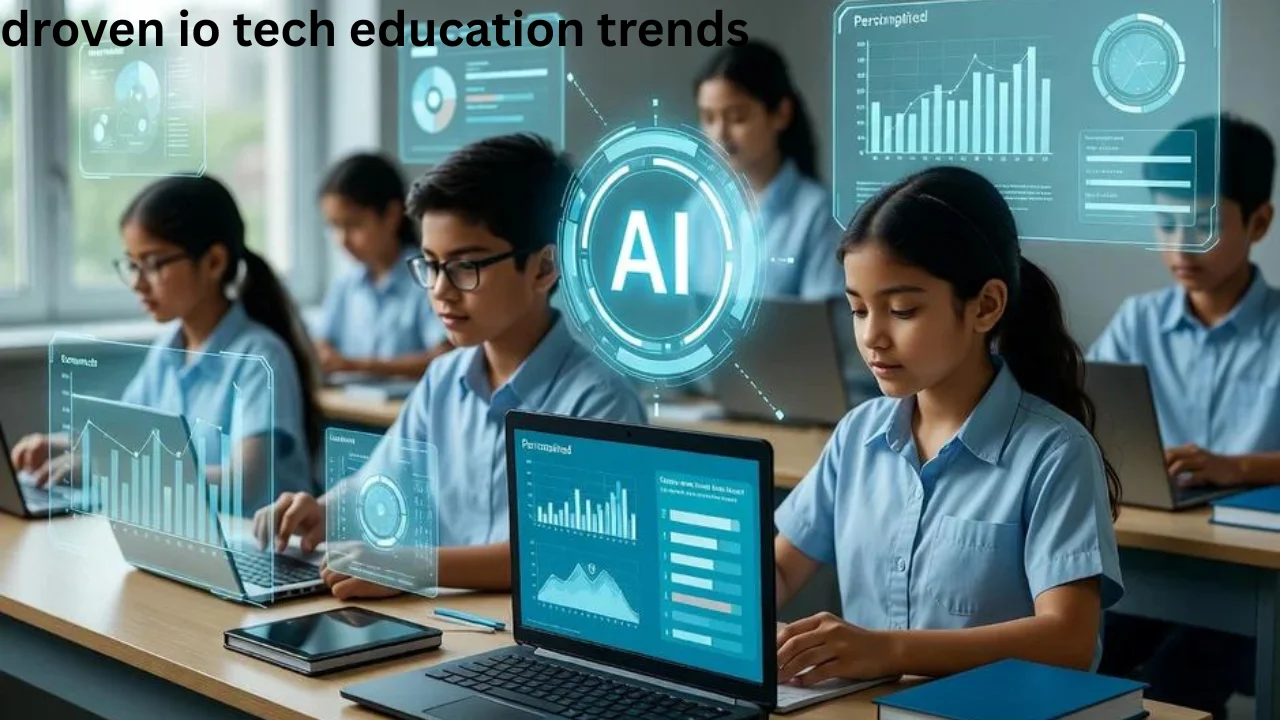
Droven Io tech education trends describe the growing use of digital tools, artificial intelligence, cloud systems, and practical training in education. These developments are changing how students study, how teachers deliver lessons, and how schools measure progress.
Modern learners no longer depend only on printed books and classroom lectures. They can join virtual classes, receive instant feedback, practise skills through simulations, and access learning materials from almost any location.
Technology does not remove the need for teachers. Instead, it gives teachers better ways to understand student needs, manage routine tasks, and create more useful learning experiences.
You May Like: tubehalote
What Are Droven Io Tech Education Trends?
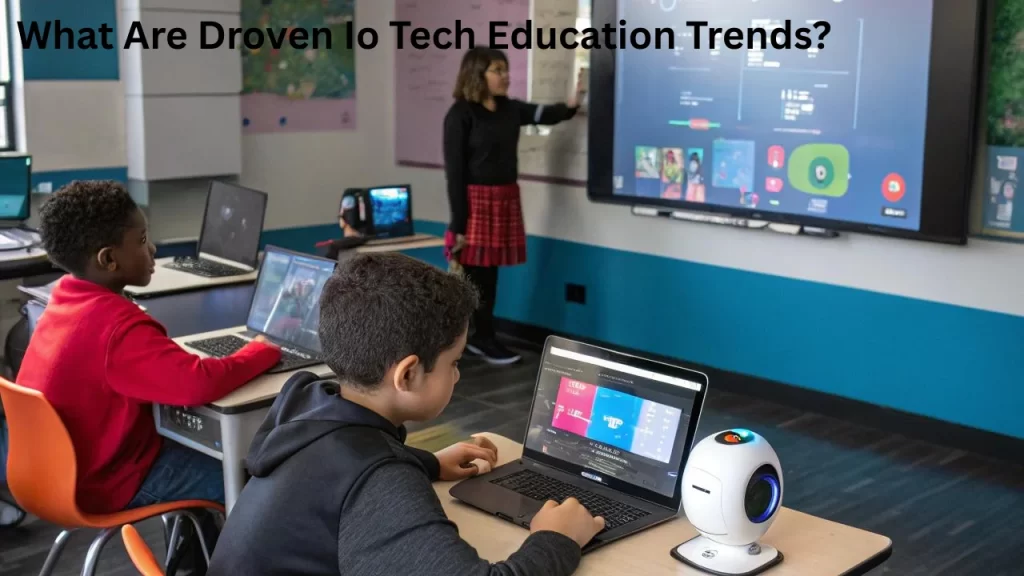
The term refers to a group of modern changes connected with technology-based education. It covers artificial intelligence, online learning, smart classrooms, cloud computing, automation, and career-focused training.
Rather than describing one fixed teaching system, it can be understood as a broad learning approach. This approach focuses on accessible education, digital skills, flexible study, and practical knowledge.
The main goal is to make learning more personal and useful. Students should not only remember information. They should also know how to apply it in real situations.
Why Technology Is Becoming Important in Education
Technology has become part of daily life, business, communication, and employment. Schools and training centres must therefore prepare learners for a world where digital knowledge matters.
A traditional lesson often gives the same material to every student. However, students learn at different speeds and have different strengths. Digital tools can help teachers provide extra practice or advanced work based on each learner’s progress.
Technology also removes many location limits. A learner in a small town can attend an online class, watch a recorded lecture, or complete a professional course from another country.
Artificial Intelligence in Droven Io Tech Education Trends
Artificial intelligence is one of the main forces changing education. AI-powered systems can study learner activity and suggest lessons based on individual performance.
For example, a student who struggles with fractions may receive simpler examples and extra exercises. A student who understands the topic quickly may move to more advanced questions.
AI tools can also support teachers. They can help create quizzes, organise lesson plans, check basic assignments, and identify areas where students need more attention.
However, learners should not accept every AI-generated answer as correct. Teachers must develop critical thinking, fact-checking, and responsible AI use alongside technical knowledge.
Personalized Learning for Different Student Needs
Personalized learning gives students educational content that matches their level, pace, and goals. It moves away from the idea that every learner must follow exactly the same path.
Digital platforms can track quiz results, completed lessons, common mistakes, and study time. They can then recommend suitable materials for each learner.
This system may help students who need more time without making them feel left behind. It can also challenge advanced learners who are ready to study difficult concepts.
Personalization works best when a teacher remains involved. Technology can show patterns, but teachers understand a student’s motivation, emotions, interests, and personal challenges.
Cloud-Based Education and Easy Access
Cloud computing allows schools to store educational materials online. Students can open notes, presentations, assignments, videos, and other resources through an internet-connected device.
Cloud platforms also support group work. Several students can edit a shared document, exchange feedback, and complete projects without sitting in the same room.
Teachers can update lesson materials quickly instead of printing new copies. Students can also access the latest version of a file and continue their work from home.
Schools must still protect personal information. Strong passwords, access controls, secure platforms, and clear privacy rules are important parts of cloud-based learning.
The Growth of Hybrid and Virtual Classrooms
Hybrid learning combines face-to-face teaching with online education. Students may attend some lessons in a classroom and complete other activities through a digital platform.
This model offers flexibility while keeping personal contact with teachers and classmates. It can also support students who cannot attend school because of travel, illness, work, or family duties.
Virtual classrooms may include live video lessons, online discussion boards, digital whiteboards, group rooms, and recorded lectures. These features allow students to communicate and review lessons later.
A successful hybrid classroom needs more than a video meeting tool. Teachers must plan lessons carefully so online and in-person students receive equal attention.
Skill-Based Learning Over Simple Memorization
One major part of Droven Io tech education trends is the move toward skill-based education. Employers often need people who can solve problems, use digital tools, communicate clearly, and complete real tasks.
Students may understand a topic better when they work on projects. For example, a coding learner can create a small application instead of only reading programming definitions.
Practical tasks help students connect theory with real situations. They can also develop teamwork, planning, decision-making, and time-management skills.
This does not mean basic knowledge has become unimportant. Learners still need facts and concepts, but they must also know how to use that knowledge.
Microlearning and Short Digital Lessons
Microlearning divides a large subject into small and focused lessons. Each lesson may include a short video, a simple explanation, a quick activity, or a small quiz.
This method can make difficult topics feel easier. Learners can complete one section at a time and review specific areas when needed.
Short lessons also work well on mobile devices. Students and employees can study during a break, while travelling, or whenever they have a few free minutes.
However, microlearning may not suit every subject by itself. Complex topics still require detailed discussion, long-term practice, and deeper study.
Automation in Teaching and School Management
Automation can reduce repetitive work for teachers and school staff. Digital systems can record attendance, organise schedules, send reminders, and mark simple quizzes.
Teachers can use the saved time to explain difficult ideas, support struggling learners, and improve lesson quality. Automation should help teachers rather than replace their professional role.
Schools can also use data dashboards to view attendance, course completion, and assessment results. These records may reveal learning gaps before they become serious.
Automated decisions still require human review. A system may identify a low score, but it may not understand the personal reason behind that result.
Virtual Reality and Immersive Learning
Virtual reality allows learners to enter a computer-created environment. A student may visit a historical location, explore the human body, or practise a workplace task through a virtual simulation.
Augmented reality adds digital objects or information to the real world. Students may point a device at an image and see an interactive model appear on the screen.
These tools can make lessons more memorable because students take part in the experience. They are especially useful for science, medicine, engineering, history, and technical training.
Cost and device access remain major challenges. Schools should use immersive tools only when they support clear learning goals.
Gamification and Student Motivation
Gamification uses game-like features in a learning activity. These features may include points, badges, progress levels, challenges, and achievement rewards.
A progress bar can help students see how much work they have completed. A small challenge can also encourage them to practise a difficult skill more often.
Good gamification focuses on learning rather than competition alone. Students should not chase points without understanding the lesson.
Teachers should also avoid creating pressure for learners who do not enjoy competitive activities. Team challenges and personal progress goals may offer a better balance.
Digital Assessment and Instant Feedback
Digital assessment is another important element of modern education. Online tests can provide quick results and show students which questions they answered incorrectly.
Instant feedback helps learners correct mistakes while the topic remains fresh. Teachers can also view class results and identify concepts that need another explanation.
Modern assessment may include digital projects, recorded presentations, online portfolios, simulations, and practical tasks. These methods can measure more than memory.
Schools must protect academic honesty. They need clear rules for AI tools, online exams, teamwork, source use, and original student work.
Important Skills for the Future Workplace
Technology is changing job roles, but technical ability is only one part of career readiness. Students also need communication, creativity, teamwork, and sound judgment.
Future-focused education may include AI literacy, data analysis, coding, cybersecurity, cloud operations, automation, and digital research. These skills can support careers across many industries.
Human skills remain equally valuable. Employers need workers who can understand people, explain ideas, solve unfamiliar problems, and adapt to change.
A balanced learning system should therefore teach digital skills and human abilities together.
| Skill Area | Useful Skills | Practical Purpose |
|---|---|---|
| Artificial intelligence | Prompt writing, AI evaluation and responsible use | Helps learners use AI safely |
| Data skills | Data reading, analysis and visualization | Supports informed decisions |
| Cloud technology | File sharing and online collaboration | Makes remote teamwork easier |
| Cybersecurity | Password safety, privacy and risk awareness | Protects digital information |
| Human skills | Communication, creativity and teamwork | Supports workplace performance |
| Critical thinking | Fact-checking and source evaluation | Reduces false or weak information |
Teacher Training and the Human Role
Teachers need training before schools introduce new educational technology. A powerful platform provides little value when teachers do not know how to use it properly.
Training should cover technical use, lesson planning, data privacy, digital safety, and fair assessment. Teachers should also learn how to recognise weak or inaccurate AI content.
The teacher’s role may change from delivering information to guiding learning. Students can find information online, but they still need help understanding, questioning, and applying it.
Human support also creates trust. A digital tool cannot fully replace encouragement, empathy, classroom leadership, or personal guidance.
Challenges of Technology-Based Education
Digital education offers many benefits, but it also creates problems. Not every student owns a suitable device or has reliable internet access.
This digital divide can increase educational inequality. Schools and governments may need to provide devices, internet support, offline materials, or shared technology centres.
Privacy is another concern because learning platforms may collect personal and performance data. Schools should explain what information they collect and how they protect it.
Too much screen time can also affect attention and healthy routines. Digital lessons should include discussion, writing, physical activity, and offline project work.
Responsible and Ethical Use of AI
AI systems may produce incorrect, incomplete, or biased information. Students should learn to compare sources and check important claims instead of trusting every response.
Schools also need clear rules about acceptable AI use. Learners should understand when AI can support research and when they must complete work independently.
Teachers can ask students to explain their thinking, show drafts, discuss sources, and apply knowledge during practical tasks. These methods make assessment more meaningful.
Responsible use means treating AI as a learning assistant rather than a replacement for effort, thought, and creativity.
Benefits for Students, Teachers, and Institutions
Students can receive flexible lessons, faster feedback, and access to a wider range of courses. They may also practise job-related skills before entering the workplace.
Teachers can save time on routine work and use performance data to plan better lessons. They can focus more attention on explanation, feedback, and personal support.
Institutions can offer online programs, organise digital records, and serve learners across different regions. They may also update courses faster when industry needs change.
The greatest benefit comes when technology solves a real educational problem. Schools should not adopt tools simply because they appear modern.
The Future of Droven Io Tech Education Trends
The future will likely include more AI tutors, adaptive courses, digital credentials, immersive simulations, and cloud-based learning systems. Education may become more flexible and connected with workplace needs.
Students may collect short certificates for specific skills instead of depending only on one long degree. These digital credentials could show what a person can actually do.
Learning will also continue after school or university. Workers may need regular training as technology changes tasks, tools, and job requirements.
Still, human teachers, classroom communities, and personal relationships will remain important. The best future system will combine useful technology with strong human guidance.
Frequently Asked Questions
What do Droven Io tech education trends mean?
They describe modern changes in education linked with AI, digital classrooms, cloud platforms, automation, practical skills, and personalized learning.
How does AI support students?
AI can recommend lessons, adjust question difficulty, provide feedback, and help learners practise weak areas at their own pace.
Will technology replace classroom teachers?
Technology may automate some routine tasks, but it cannot fully replace human guidance, emotional support, judgment, and classroom leadership.
Why is skill-based education important?
Skill-based education helps learners apply knowledge to real tasks. It can prepare them for employment, problem-solving, teamwork, and changing workplace needs.
What is the biggest challenge in digital education?
Unequal access to devices and reliable internet remains a major challenge. Privacy, screen time, teacher training, and misinformation also require attention.
Conclusion
Education is moving from fixed classroom lessons toward flexible, practical, and personalized learning. AI, cloud systems, virtual classrooms, digital assessment, and immersive technology can improve access and support better learning experiences.
However, schools must use these tools carefully. They should protect student data, train teachers, reduce digital inequality, and teach learners to question AI-generated information.
In the end, Droven Io tech education trends show that the future of learning depends on balance. Technology can improve education, but teachers, critical thinking, human creativity, and responsible choices will continue to guide meaningful learning.
People Also Read: webinkey.com