How Long After Wisdom Teeth Removal Can I Eat a Burger?
Few foods sound more satisfying after wisdom teeth removal than a juicy burger. Unfortunately, burgers are not exactly recovery-friendly during the first few days after surgery.
After wisdom tooth extraction, your mouth needs time to heal. The extraction sites are vulnerable, and eating hard, chewy, or bulky foods too soon can cause pain, bleeding, irritation, or even complications like dry socket.
So when can you safely enjoy a burger again?
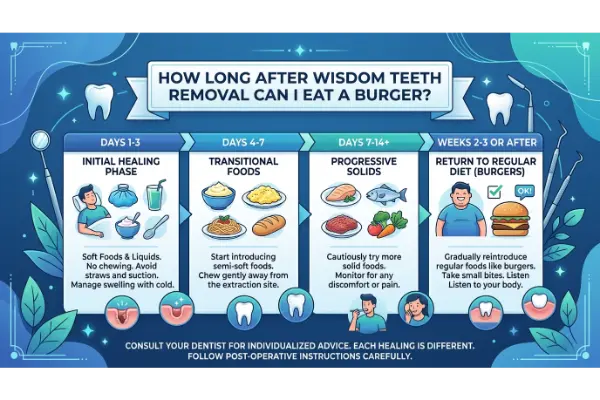
The answer depends on your recovery progress, but most people should wait at least 7 to 14 days before attempting a regular burger.
Quick Answer
| Recovery Stage | Burger Status |
|---|---|
| 1–3 days | Avoid |
| 4–7 days | Usually avoid |
| 7–14 days | Sometimes okay |
| 2+ weeks | Usually safe |
| Fully healed | No restrictions |
Why Burgers Are a Problem After Wisdom Teeth Removal
A burger may seem soft compared to foods like chips or nuts, but it actually requires quite a bit of chewing.
The bun, meat, toppings, and condiments create pressure inside your mouth. This can irritate healing tissues and disturb the blood clot protecting the extraction site.
Risks of Eating a Burger Too Soon
- Increased pain
- Bleeding
- Swelling
- Food trapped in sockets
- Delayed healing
- Dry socket risk
That’s why dentists generally recommend sticking to soft foods during the early recovery period.
What Happens During Healing?
| Time After Surgery | Healing Stage |
|---|---|
| First 24 hours | Clot formation |
| Days 2–3 | Early healing |
| Days 4–7 | Tissue repair |
| Week 2 | Significant recovery |
| Weeks 3–4 | Continued healing |
The blood clot that forms after extraction is extremely important. It protects underlying nerves and bone while new tissue develops.
Dislodging this clot can lead to dry socket, one of the most painful complications following wisdom tooth surgery.
Can I Eat a Soft Burger After One Week?
Some patients can tolerate a very soft burger after about 7 days, especially if:
- Swelling is minimal
- Pain is improving
- Healing is progressing normally
- Chewing feels comfortable
However, this varies from person to person. Complex extractions often require longer recovery periods than simple removals.
What Kind of Burger Is Easier to Eat?
| Better Option | Avoid |
|---|---|
| Soft bun | Toasted bun |
| Tender patty | Thick burger |
| Small bites | Large bites |
| Plain burger | Crunchy toppings |
| Soft cheese | Crispy bacon |
If you decide to try a burger during recovery, choose the softest version possible and chew carefully away from extraction sites.
Signs You’re Not Ready for a Burger Yet
Your mouth will usually tell you if you’re moving too fast.
Warning Signs
- Jaw soreness
- Persistent swelling
- Pain while chewing
- Bleeding
- Sensitive extraction sites
- Difficulty opening your mouth
If any of these symptoms remain significant, it’s probably best to wait longer.
Best Foods During the First Week
| Food | Recovery Friendly |
|---|---|
| Yogurt | Yes |
| Applesauce | Yes |
| Mashed potatoes | Yes |
| Smooth soup | Yes |
| Scrambled eggs | Yes |
Soft foods help you stay nourished without putting unnecessary stress on healing tissues.
What About Cheeseburgers?
A cheeseburger is not significantly different from a regular burger when it comes to recovery. The main concern is still chewing.
Soft melted cheese may make the burger easier to eat, but the meat and bun can still create pressure on healing areas.
How to Return to Normal Foods Safely
| Step | Goal |
|---|---|
| Soft foods | Early healing |
| Soft solids | Build comfort |
| Gentle chewing | Test recovery |
| Normal meals | Resume routine |
| Hard foods | Full recovery |
Recovery is usually gradual. Most people transition from liquids to soft foods before moving on to more solid meals.
Does It Matter Which Wisdom Teeth Were Removed?
Yes.
If your lower wisdom teeth were removed, recovery may take longer because lower extractions are often more complex. These areas are also more prone to complications such as dry socket.
Upper wisdom tooth extractions sometimes heal faster, although every patient is different.
What Happens If Food Gets Stuck?
Food particles can become trapped in extraction sites during healing.
This may cause:
- Bad taste
- Irritation
- Discomfort
- Inflammation
Following your dentist’s cleaning instructions can help keep the area healthy during recovery.
Tips Before Eating Your First Burger
Smart Recovery Tips
- Start with small bites
- Chew slowly
- Avoid hot foods
- Drink water
- Stop if pain occurs
- Follow dentist instructions
Patience is usually worth it. Waiting a few extra days is much better than dealing with complications that could extend recovery by weeks.
Final Verdict: How Long After Wisdom Teeth Removal Can I Eat a Burger?
Most people should wait about 7 to 14 days before eating a regular burger after wisdom teeth removal. Some patients may be ready sooner, while others need additional time depending on the complexity of the extraction and how well healing is progressing.
If you still have swelling, pain, bleeding, or difficulty chewing, it’s best to postpone burgers a little longer. When you finally do try one, choose a soft burger, take small bites, and chew carefully.
Your mouth will heal much faster if you let it recover before challenging it with tougher foods.
Frequently Asked Questions
Can I eat a burger 3 days after wisdom teeth removal?
Usually not. Most dentists recommend soft foods during the first several days of recovery.
Can I eat a burger after one week?
Some people can, especially if healing is going well and chewing feels comfortable.
What happens if I eat a burger too early?
You may experience pain, irritation, bleeding, or complications that delay healing.
Is a soft burger safer than a regular burger?
Yes. Softer buns and tender meat are generally easier on healing tissues.
Can chewing cause dry socket?
Excessive pressure or actions that dislodge the blood clot may increase dry socket risk.
What foods should I avoid after wisdom teeth removal?
Hard, crunchy, spicy, chewy, and sticky foods are commonly avoided during early recovery.
When can I eat normally again?
Many people return to normal eating within 2 weeks, though recovery varies.
Should I follow my dentist’s instructions over general advice?
Absolutely. Your dentist understands your specific procedure and recovery progress better than any general guideline.